Immersion in a Guesthouse on a Pilgrimage Route in Japan

Discovery of WWOOFing. What is it?
It’s a concept where you help hosts with various tasks in exchange for accommodation and meals.
My friend Caro and I traveled to Wakayama prefecture for an 8-day stay at the Nonagase guesthouse in Chikatsuyu.
- Geographical location
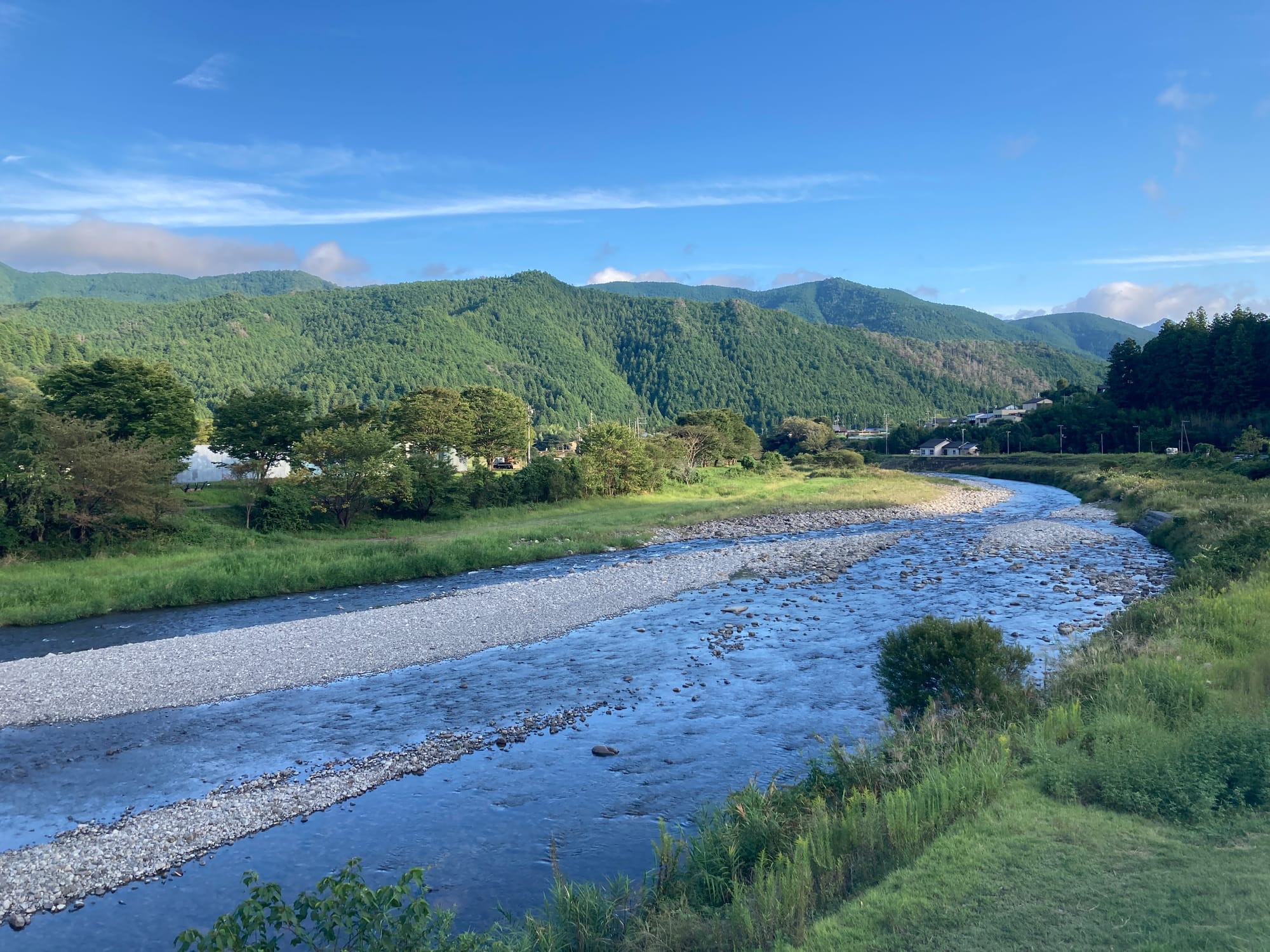
Chikatsuyu is a small village located along the Kumano Kodo pilgrimage route, specifically on the Nakahechi section (also known as the imperial route). This 70 km long trail, with significant elevation, passes through several villages, temples, and hot springs (onsen).
Kumano is the spiritual land of Japan, and this pilgrimage is quite famous (especially abroad). Some spots are even listed as UNESCO World Heritage Sites. Hikers typically cover about 20 km a day, stopping in different villages for an overnight stay.
- Guesthouse history
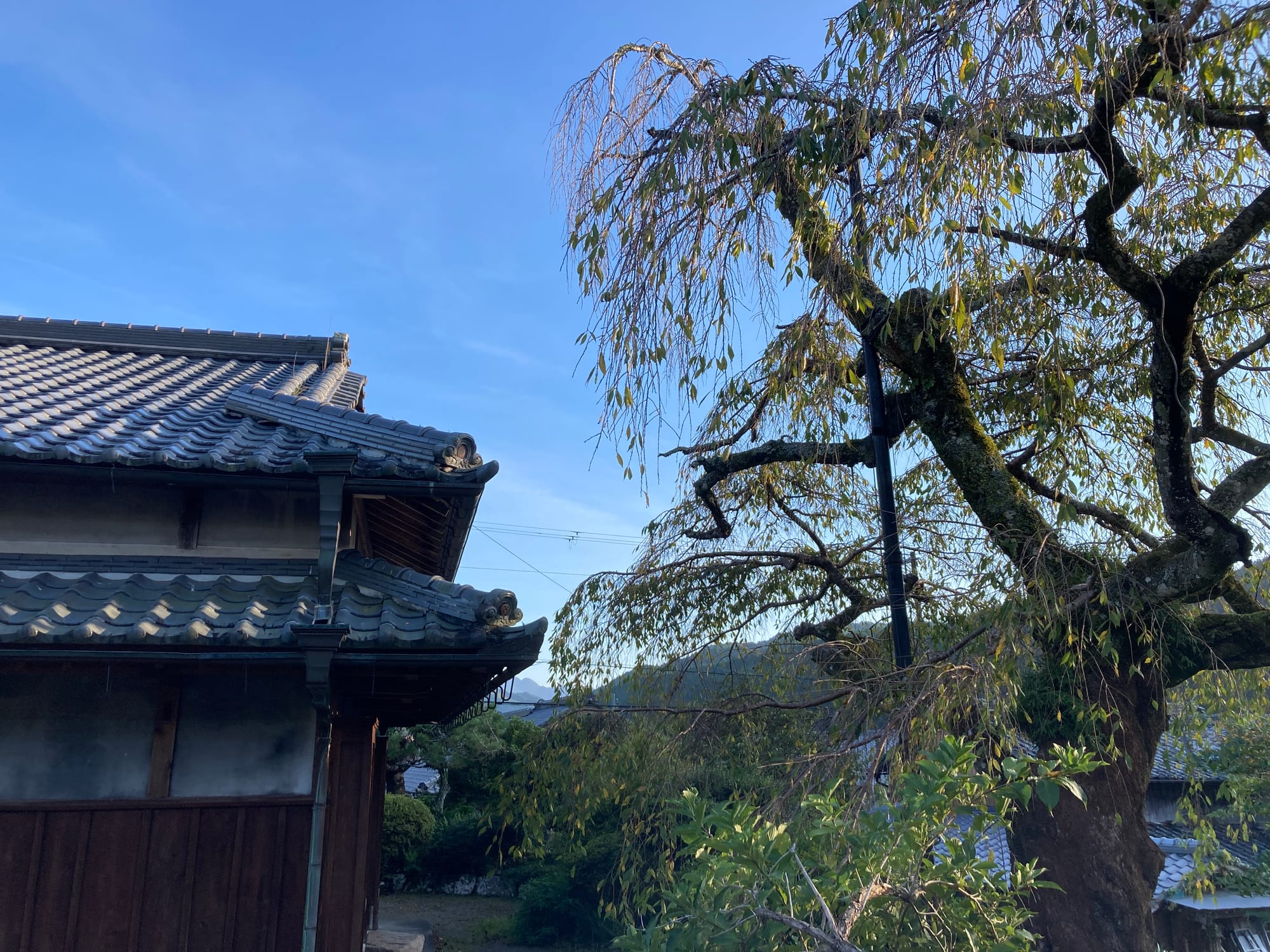
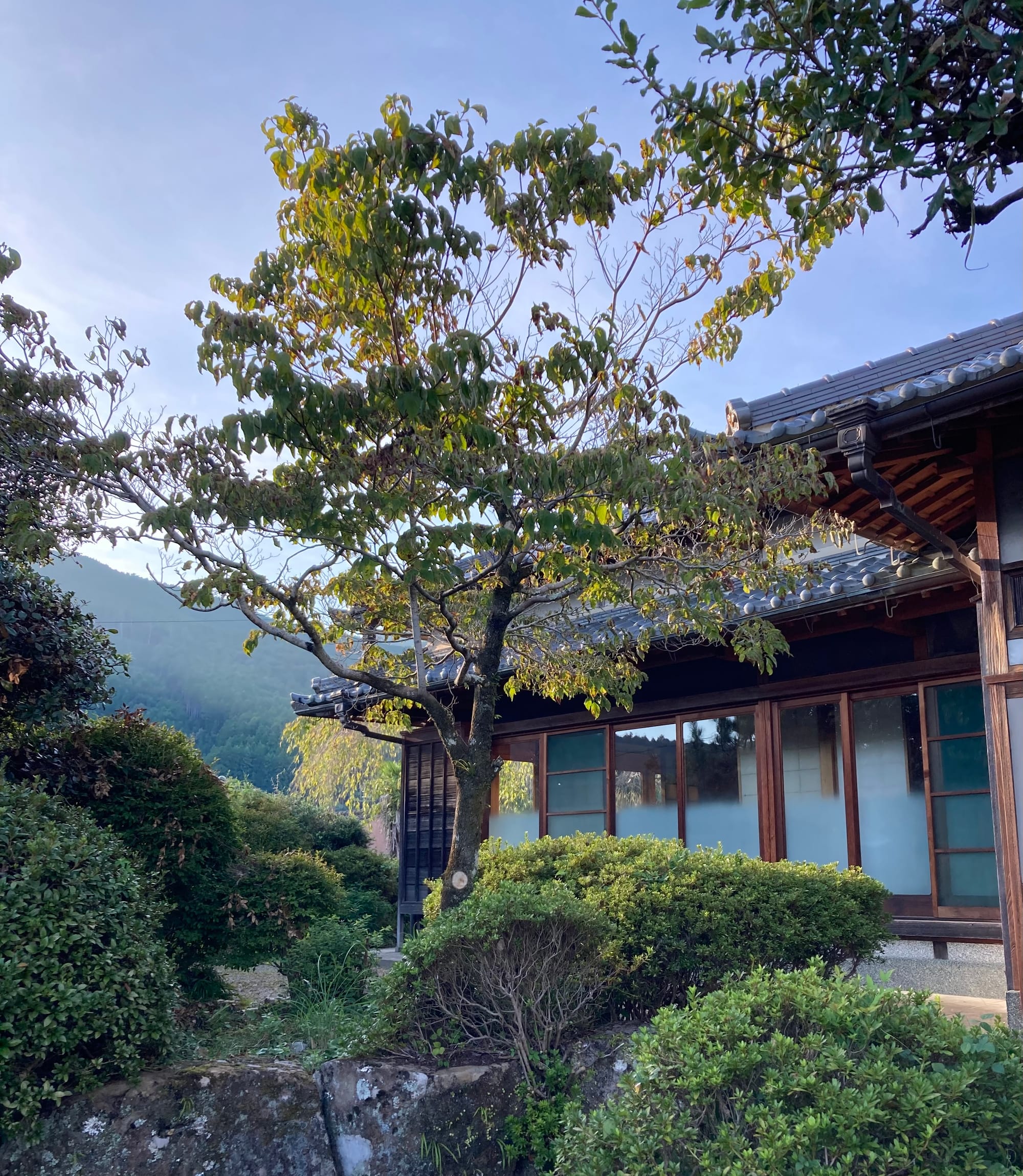
The house belonged to a member of the Nonagase family (an important samurai clan from Wakayama). Very authentic, this place, dating back to the 14th century, still holds many objects from that era. It’s a charming traditional house with two rooms (one with 1 to 3 futons and another with a double bed), hosting up to 5 guests per day.
The garden is set up as a Beer Garden to welcome hikers who want to enjoy a drink at the end of their trek. In this same garden, there is a Sakura tree that is over 300 years old, so beautiful. Many aromatic herbs also grow there (red and green shiso, thyme, matsuba, basil, etc.) and are used in the kitchen.
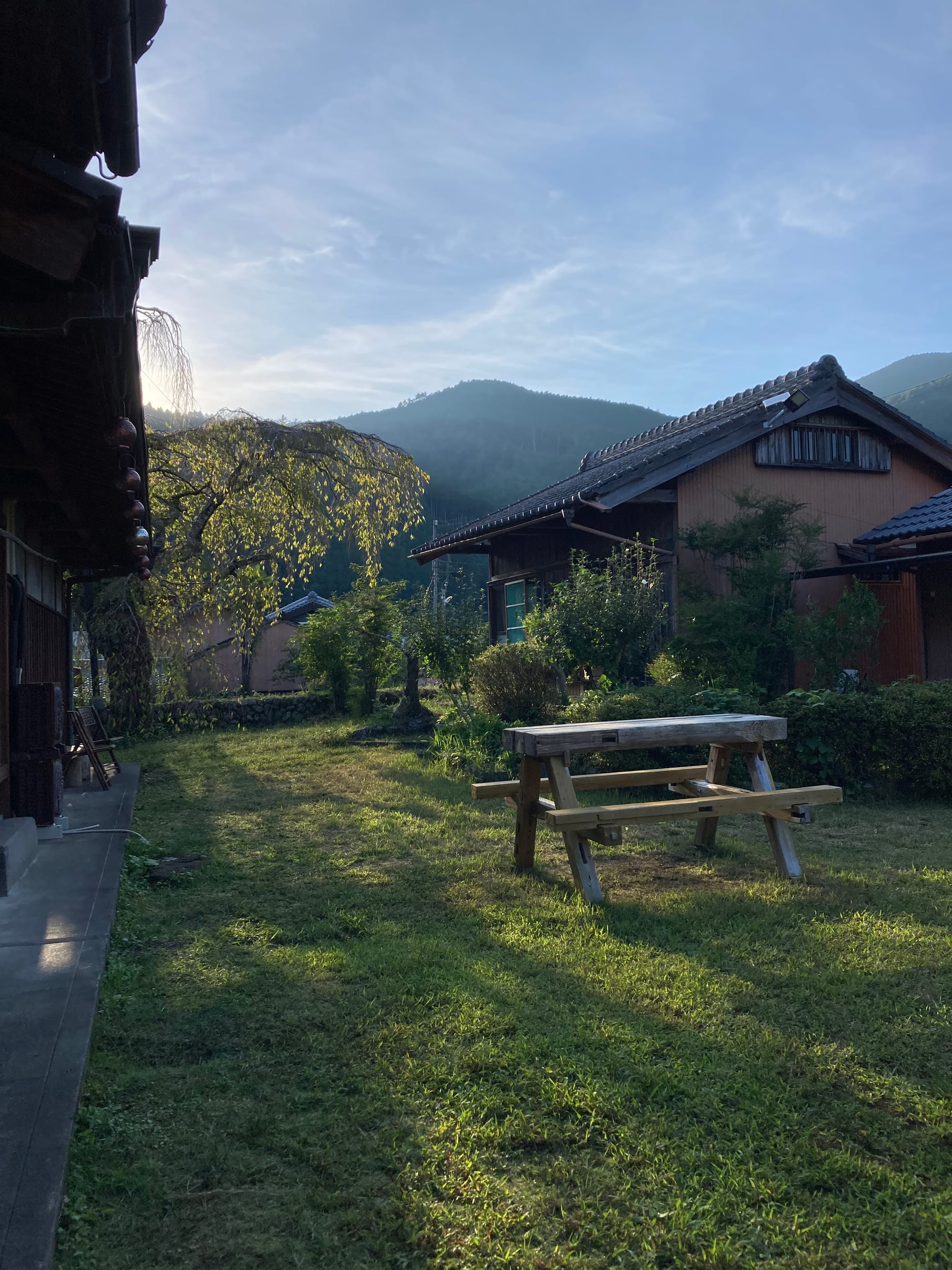
- Life in the guesthouse
Hitomi-san, the manager, welcomed us warmly. She is extremely kind, and we immediately got along.
Here’s how a typical day unfolded:
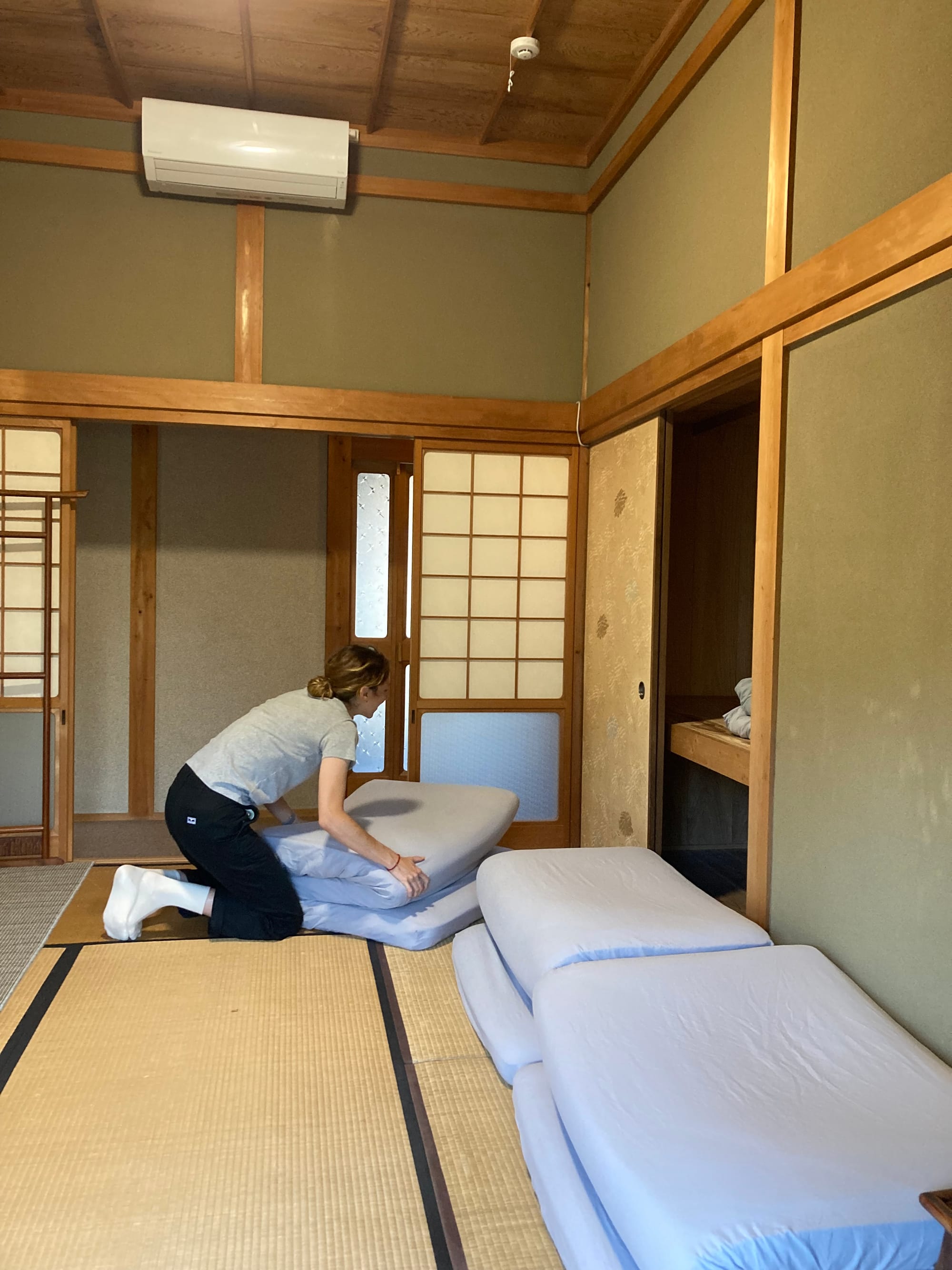
- 7 am: We started the day with music (a playlist from Mujirushi – the classic tunes from Muji stores) and got to work washing the breakfast dishes, changing bed sheets, doing laundry, and cleaning the house. All this in preparation to welcome new guests with joy and enthusiasm.
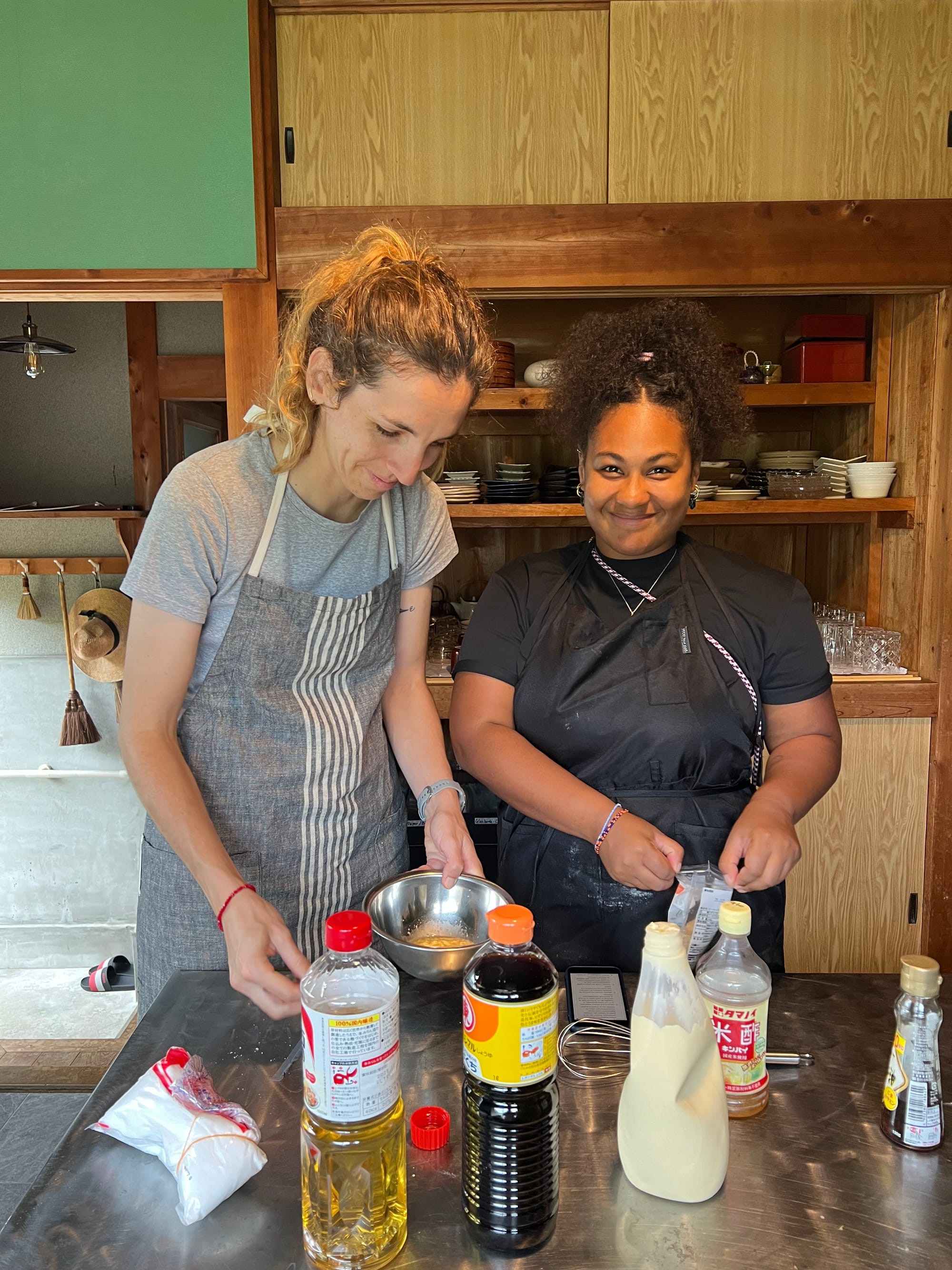
- 8:30/9 am: We had breakfast together. Sitting in the kitchen facing the garden and the mountains, we enjoyed the view. The menu varied depending on our inspiration: salad, fruit, pancakes, French toast, muffins, and more.
Then, we had free time for the rest of the morning. Our activities depended on the weather and our moods: walking by the river, running, playing cards, writing, chatting, or visiting the village museum. - 12/1 pm: You guessed it, it’s lunchtime! After brainstorming the day before, we each took turns cooking. A variety of ideas took us from udon to croque-monsieur, from Japanese curry to tomato pie, and even to Yassa chicken (senegalese speciality). Everything was delicious! Itadakimasu. Gochisousamadeshita.
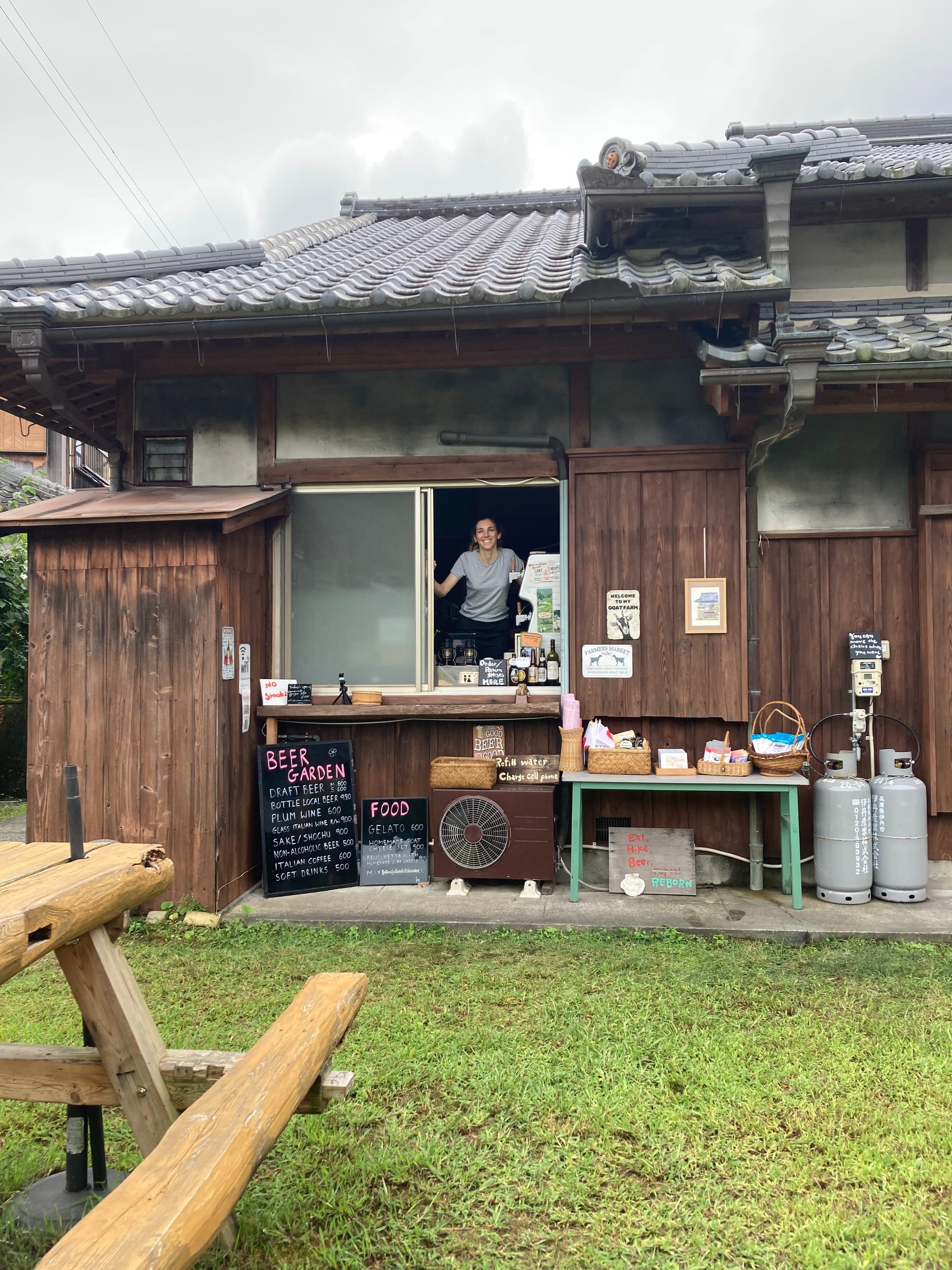
- 2 pm: The Beer Garden opened. Caro and I alternated shifts from 2-4 pm and 4-6 pm. Running a bar is lively work! Lots of movement in the kitchen and garden: preparing bruschettas and goat cheese platters, serving, and washing dishes. We also took the opportunity to chat with the customers about their hiking adventures. We never stopped and had lots of fun.
- 6 pm: Team reunion. Guests staying overnight usually opted for dinner, which started at 6:30 pm. The menu included 7 dishes carefully prepared by Hitomi-san. Caro and I acted as sous-chefs and servers, learning a lot from her. The guests were delighted, and so were we.
- 8 pm: Dinner was over. We finished the dishes washing and tidied up. The bar remained open but with fewer customers in the evening. It was our turn to have dinner, sharing various small dishes and debriefing about the day.
- 9 pm: We closed the Beer Garden. We brought in the chairs and the sign at the entrance. Time for bed in our little wood house at the back of the garden. Otsukaresamadeshita. Oyasuminasai.
- A few moments to share
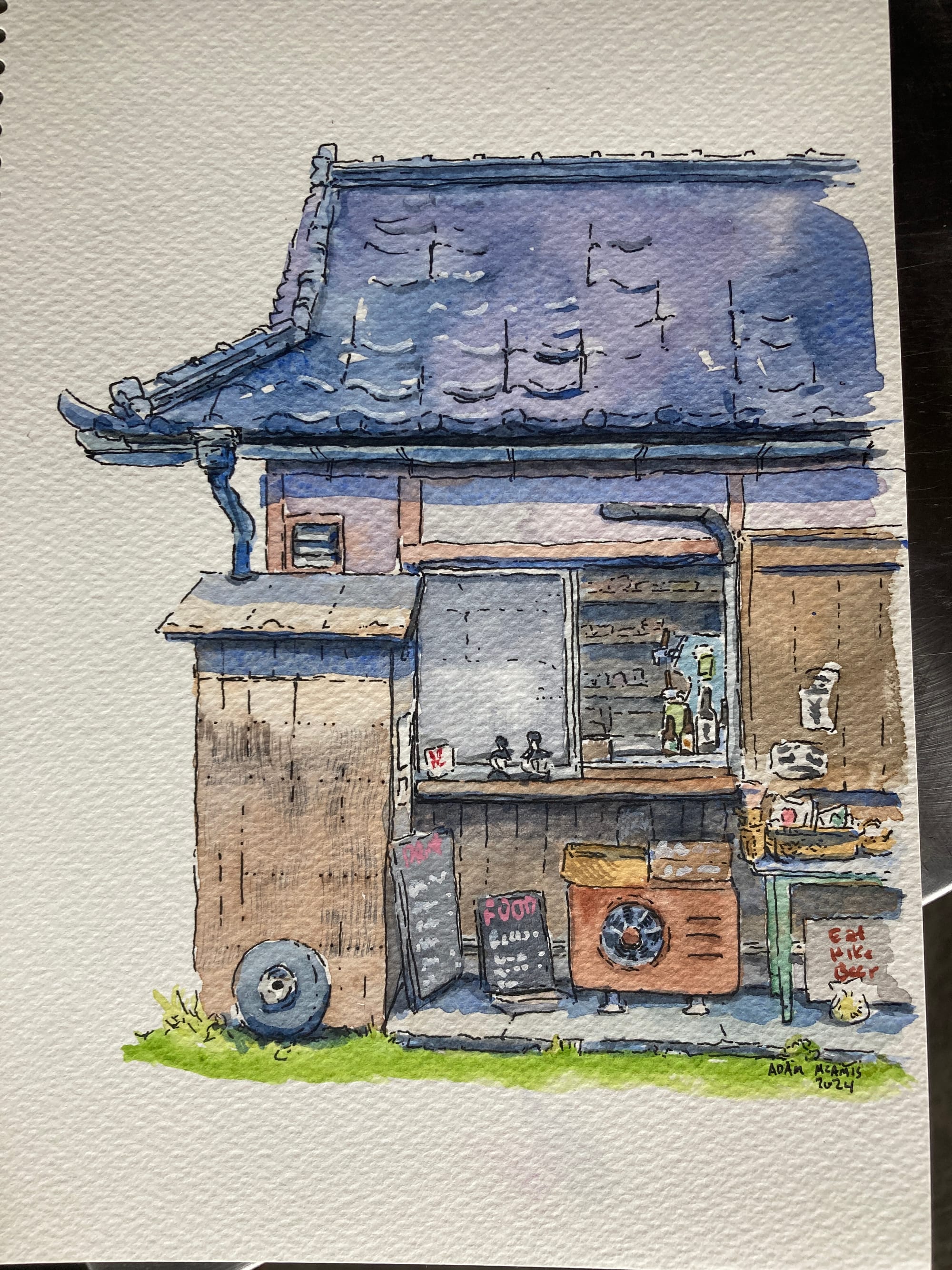
- Kawaii moment (cute): A customer drew the front of the bar and gave us the drawing. It’s now framed and proudly displayed at the bar (see picture below).
- Unexpected moment: Japanese TV came to film the village with a famous comedian, Koji Higashimo. We had the honor of saying hello to him (even though we didn’t know who he was).
- Magical moment: On one of our days off, we toured some onsen, including one of the oldest in Japan (Yunomine onsen). We were almost alone in the village and enjoyed a very hot bath followed by breakfast on a terrace by the hot springs.
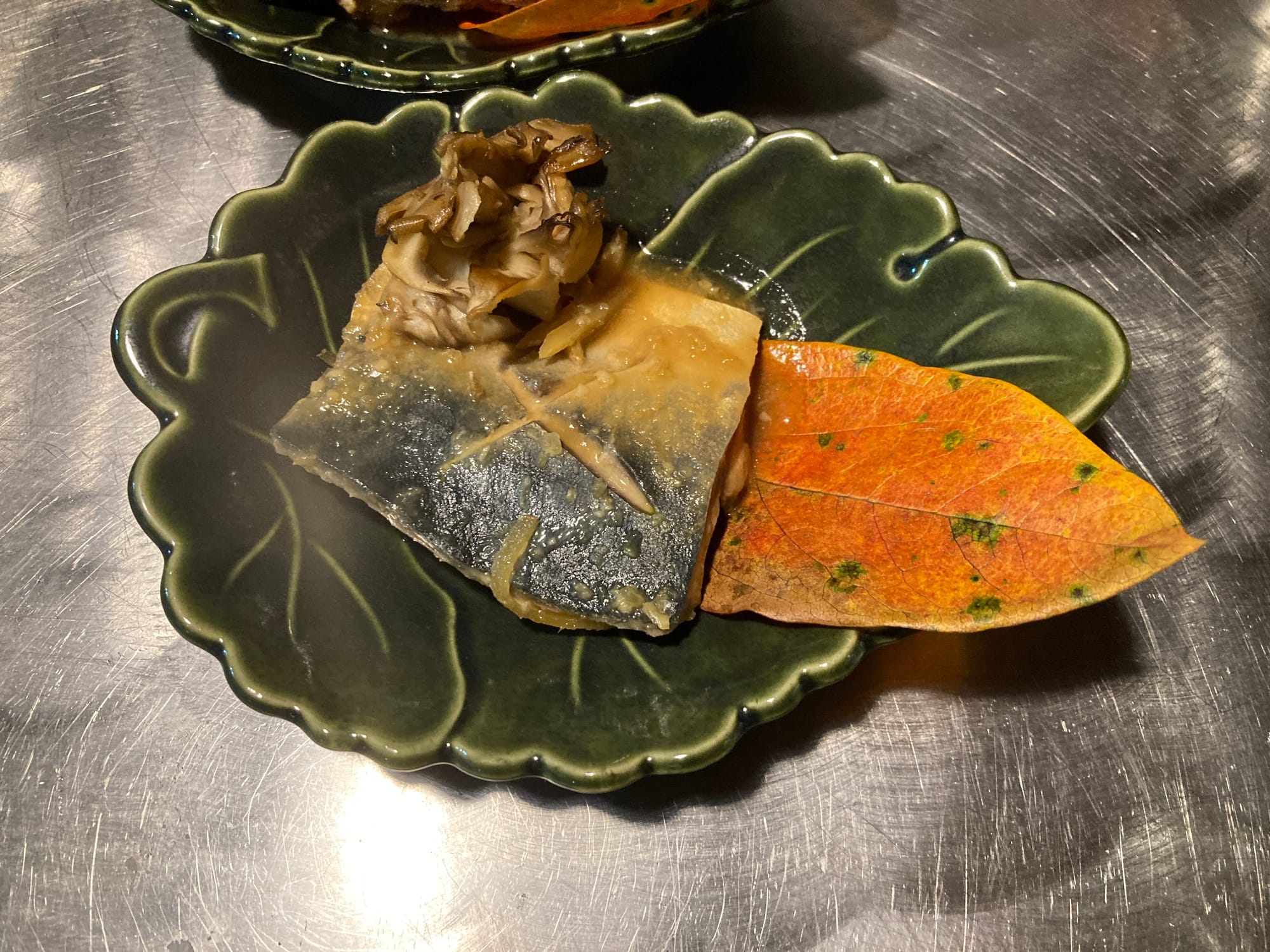
- Pleasure moment: The joy of tasting Hitomi-san recipes. We will remember the saba miso, Japanese curry, and vegan ice cream (based with berries and peanuts butter). And her little thoughtful touches: she gave us snacks that became instantly addictive.
- Creepy moment: Country life means dealing with snakes and battling a huge spider (the size of a palm), causing several panic attacks for Caro. I did my best to help her overcome her fears. Time will tell if it worked.
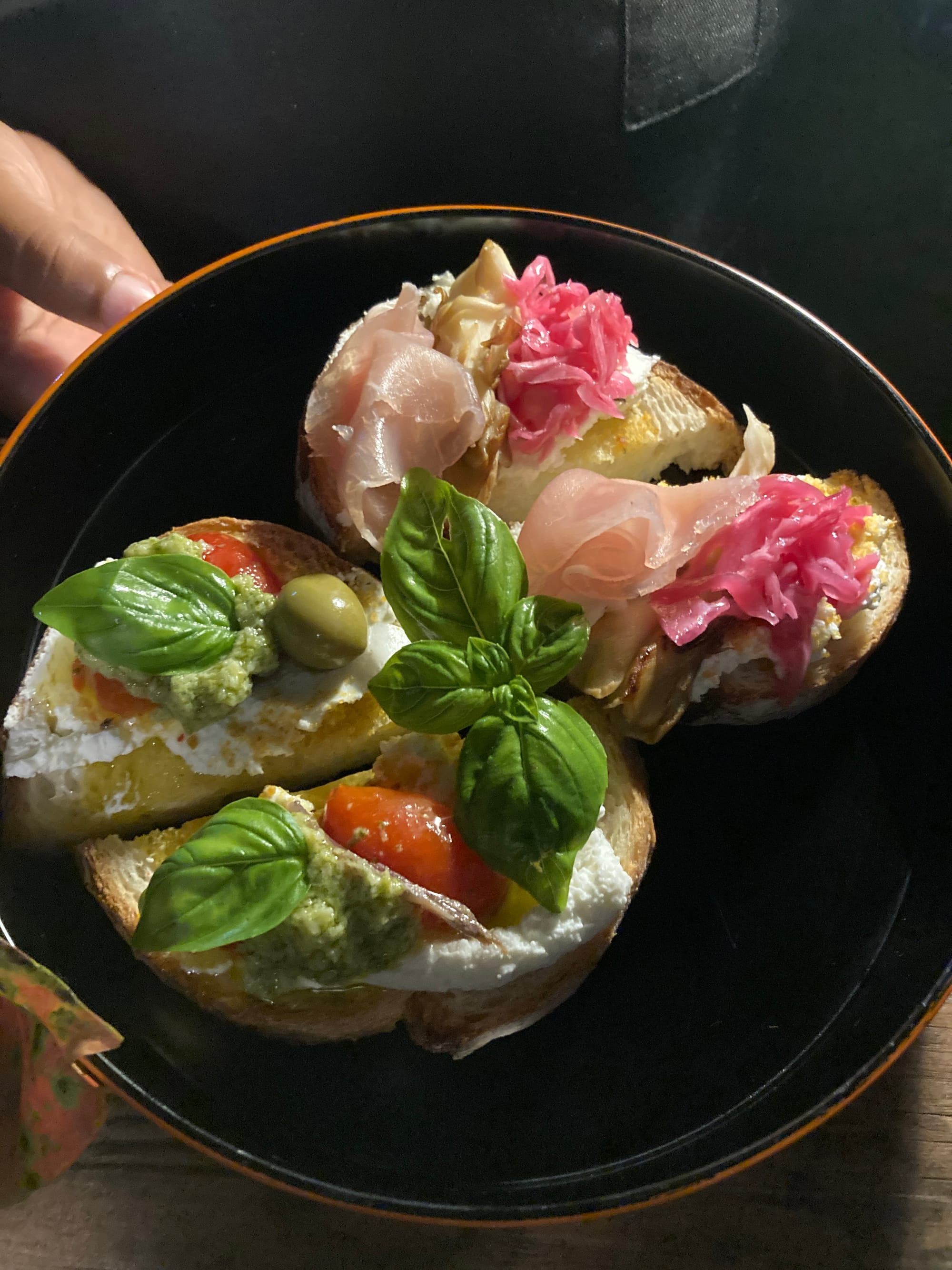
- Funny moment: After a few days of immersion, we realized how much work it takes to run a guest house. When the Beer Garden opened, Caro jokingly said, "If anyone asks me a bruschetta now, I’ll be mad." Indeed, bruschettas are meticulous. We count up to 7 or 8 different ingredients, all carefully placed on the bread. In short, it’s beautiful and tasty (see picture below).
- Conclusion
A positive experience filled with lots of fun and stories. It’s the kind of experience that strengthens friendships and also allows you to discover yourself in a new environment. The mood, the people we met and our host Hitomi-san made this stay unique.